
Geographies of material
Between Florence and São Paulo, Luciana Vilas Boas's practice crosses cultures, memories, and materials, transforming distance into visual language.
Material art between memory, sustainability, and gesture
Between Florence and São Paulo, an artistic practice grounded in material, memory, and gesture.
Firenze · São Paulo
Every work is a fragment of history. And every story deserves to be eternalized with beauty.
L. G. Vilas Bôas
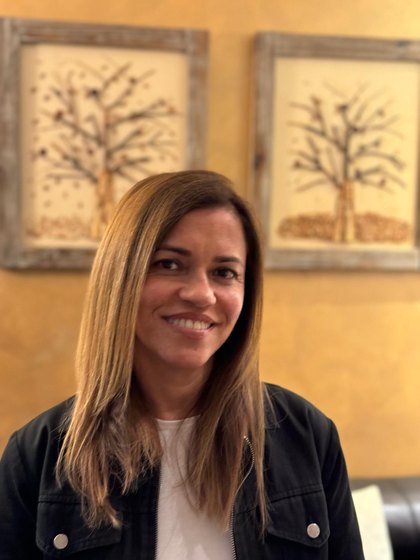
Between Florence and São Paulo, Luciana Vilas Boas develops a language founded on the transformation of material and the memory of objects. Her works arise from a sensitivity attuned to time, texture, and the emotional value of sustainability.
The wine cork, once a residue of daily life, becomes a narrative fragment. Every mark, cut, and surface preserves a trace: a gesture, an encounter, a place, an instant.
Luciana works with cork as a living material: porous, marked by wine, bearer of convivial stories. Selection, cutting, and recomposition are manual gestures that build dense, tactile surfaces.
The origin of the material is not concealed but made integral to the visual narrative. Each work is unique, unrepeatable in its layering.
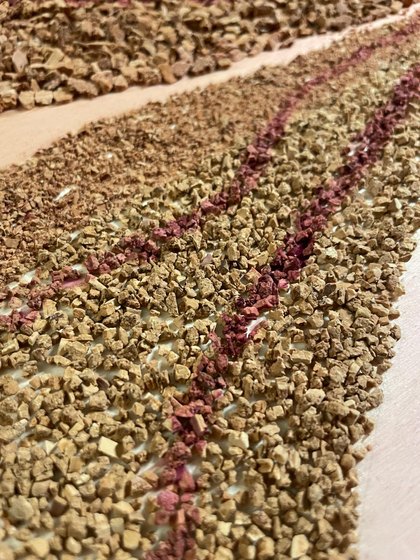
Transformation unfolds slowly, through a balance of technique and intuition. Residue becomes artistic presence; the everyday acquires aesthetic and poetic dignity.
The works invite pause and contemplation. For Luciana, art goes beyond the object: it is an invitation to attentive looking, to recognize beauty in time and texture.
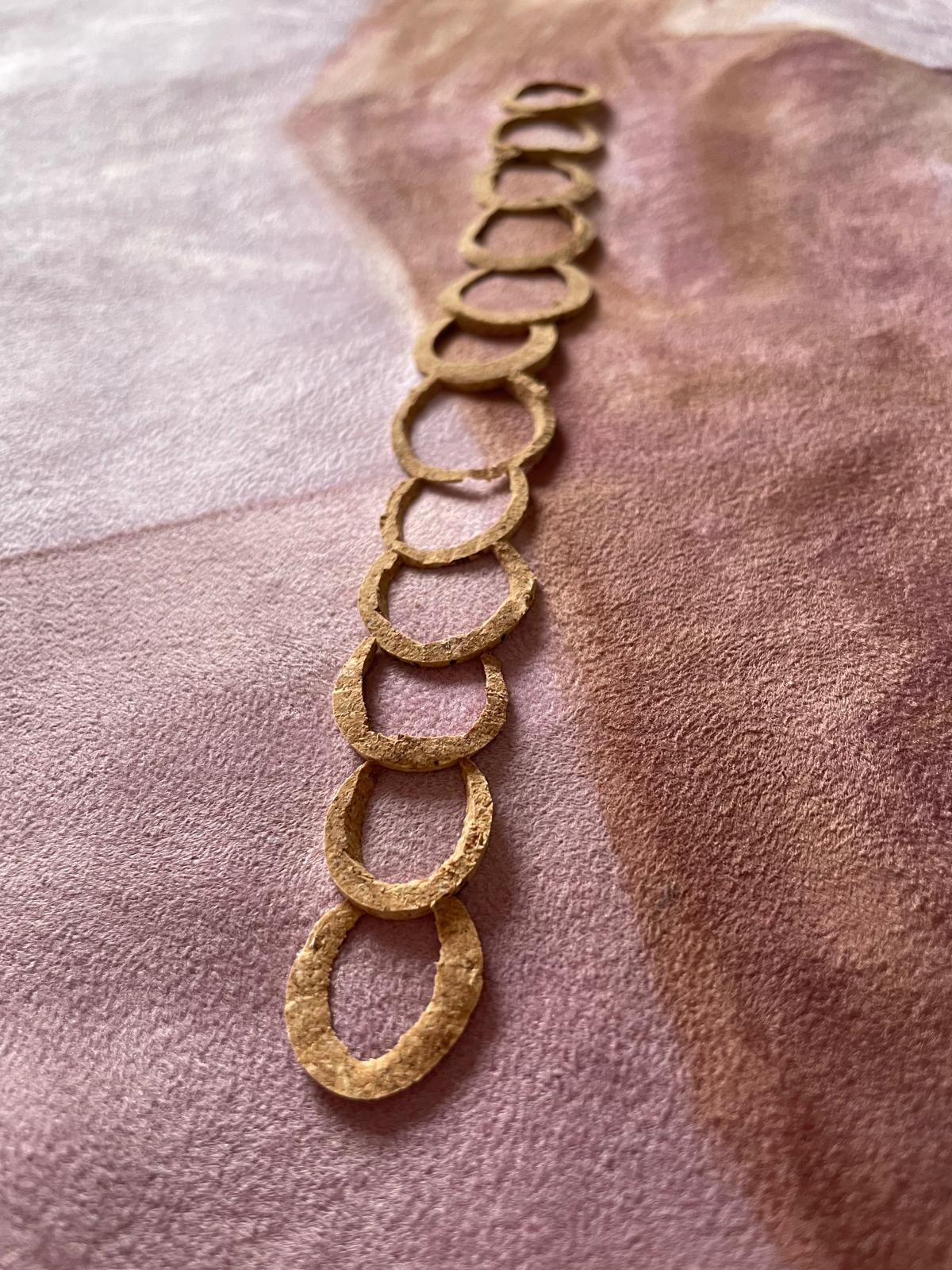
Luciana Vilas Boas transforms wine corks and reclaimed cork into works of art, combining technique, poetry, and a sustained attention to sustainability. Her compositions give new meaning to the ordinary and celebrate the beauty of time, material, texture, and memory.
Between Florence and São Paulo, Luciana Vilas Boas's practice crosses cultures, memories, and materials, transforming distance into visual language.